The Sleep Lab
Put in your actual times and Dr. Sana works out the gap between the sleep you think you are getting and the sleep you are actually getting, how much caffeine is still circulating when your head hits the pillow, and whether this week calls for a deload.
She is the evidence-based antidote to overtraining culture. She argues with Dom about rest days, and she wins, because she brings the paper.
Caffeine still in your system
The thing a calculator cannot catch
If you sleep eight hours and still wake exhausted, stop optimising and get assessed. The most common cause is obstructive sleep apnoea, and no amount of sleep hygiene, magnesium, or wind-down routine touches it. It is very common, frequently undiagnosed, and it raises cardiovascular risk. It is also highly treatable once identified.
Ask your clinician about a sleep study if you have any of these:
- Loud snoring, or a partner who has seen you stop breathing or gasp in your sleep.
- Waking with a dry mouth, a headache, or a sore throat, most mornings.
- Falling asleep easily during the day, especially driving or in meetings, despite adequate time in bed.
- Nightly urination, or high blood pressure that is difficult to control.
- Insomnia that has lasted more than three months. Ask specifically about CBT-I, which is the first-line treatment.
Sana: "The number on your watch is not a diagnosis. If you are tired after eight hours, the problem is not your discipline."
Sana's four rules of recovery
- A consistent wake time beats a consistent bedtime. Your body clock anchors to light and to waking. Pick a wake time you can hold seven days a week, including weekends, and the bedtime tends to sort itself out. This is the highest-leverage change most people can make and it costs nothing.
- Sleep is where the training adaptation happens. Restricting sleep reduces muscle protein synthesis, impairs glucose handling, raises perceived exertion, and increases injury risk in athletes. You cannot out-program it. Dom knows this. Dom still tries.
- Deload before you need it, not after. Rising resting heart rate, falling HRV over a week or more, worse sleep, and sessions that feel harder at the same load are the signals. Take the easy week while you can still choose to.
- Track for information, not for a score. Wearables are useful for spotting your own trends over weeks. They are poor at scoring any single night, and worrying about your sleep score is itself a documented way to sleep worse.
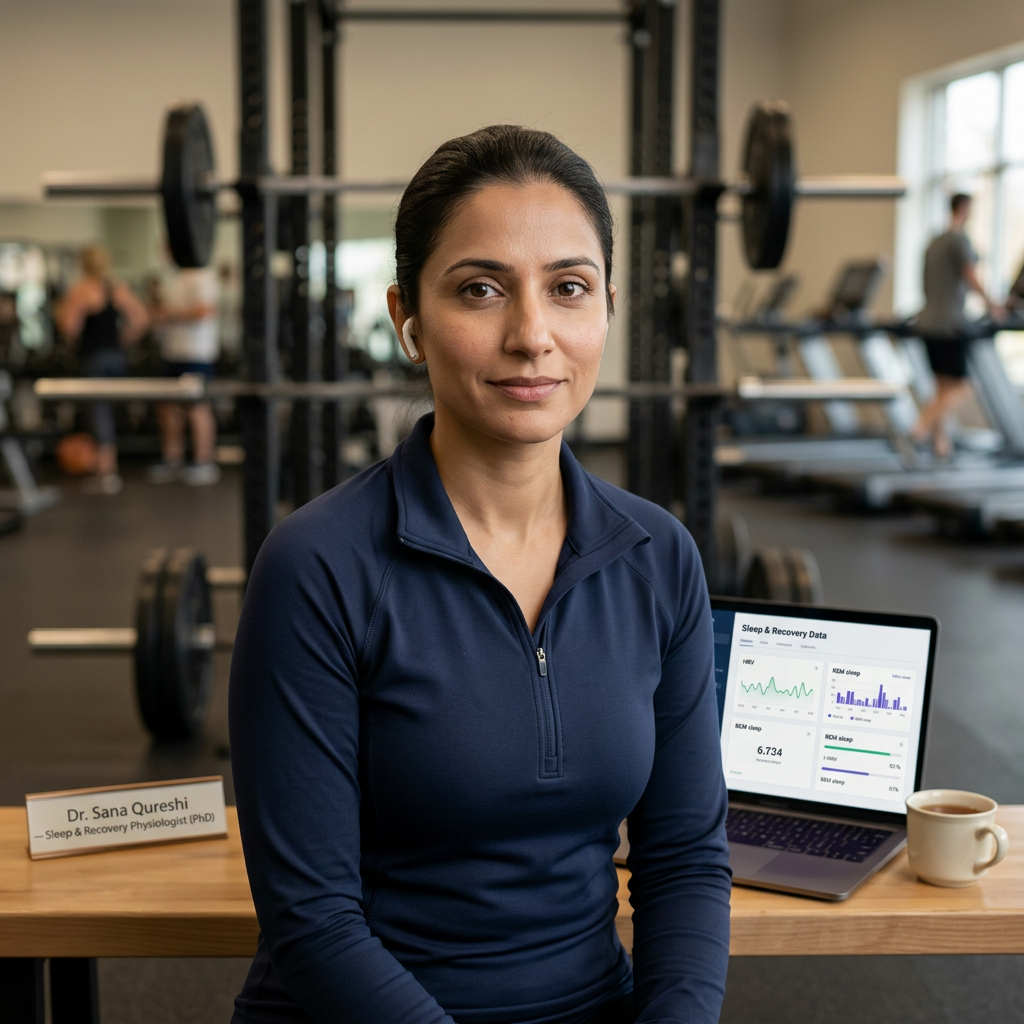
Dr. Sana Qureshi
"Love the effort. Now show me your sleep from this week." Never smug, always sourced.
- Coach Dom Castellanos — the headline rivalry, friendly and constant. He programs one more hard day, she pulls it back to a deload and produces the study. They respect each other completely, which is why it is funny.
- Noor Haddad — usually ends the Dom argument by making them both breathe. Her wind-down sessions are the on-ramp into everything on this page.
- Dr. Lena Brandt — when the answer is that tissue needs time rather than technique, Lena and Sana are saying the same thing from two directions.
- Wyatt E. Cooper — she rules on the tart cherry and magnesium questions at his bar, usually by pointing out the effect is smaller than the menu implies.
- Nadia Hassan — fuel and recovery are the same conversation, so they tend to arrive together.
How the staff verify (so you don't have to take our word for it)
Sana is the reason this site has a recovery section at all. Every figure on this page comes from published physiology rather than from a wearable's marketing copy, and where the science is genuinely uncertain, she says so instead of rounding it up.
Green means the evidence backs it. Amber means it depends, and here is on what. Red means a popular claim that is wrong.
Educational, not medical advice, and not a diagnosis. The calculations here are simplified estimates. Caffeine metabolism in particular varies several-fold between individuals based on genetics, liver enzyme activity, smoking, pregnancy, and medication, so treat the figure as a rough guide to your own pattern rather than a measurement. This page does not diagnose or treat any sleep disorder. Persistent insomnia, excessive daytime sleepiness, loud snoring, or witnessed pauses in breathing warrant assessment by a clinician. Do not stop or change any prescribed medication based on anything here. If you are having thoughts of harming yourself, the 988 Suicide and Crisis Lifeline is available in the US by calling or texting 988.