The Body Map
Pick where it hurts. Dr. Lena Brandt tells you what it usually turns out to be, how to keep training around it, what to stop doing today, and the specific signs that mean you close this page and call a clinician.
She is the licensed authority on this floor and the brake on everyone else's enthusiasm. This page exists because getting hurt while trying to get healthy is the worst outcome there is.
Before anything else
This page cannot examine you, and it is not a diagnosis. It is the conversation Lena has on the floor before she sends someone for a real assessment.
Call emergency services now, or go to an emergency department, if any of these are true:
- Chest pain or pressure, or pain spreading to your jaw, neck, or arm, with sweating, nausea, or shortness of breath.
- Numbness or weakness in the groin or inner thighs, or any new loss of bladder or bowel control, with back pain. This is a surgical emergency.
- A joint that is visibly deformed, or a limb you cannot bear any weight on at all after an injury.
- A snap or pop followed by immediate loss of function, especially at the back of the ankle or the front of the knee.
- Severe pain with fever, or a hot, red, swollen joint. That can be an infection.
- Head injury with confusion, repeated vomiting, worsening headache, or any loss of consciousness.
Lena: "I would rather you go and be told it was nothing. That is a good outcome, not a wasted trip."
Keep training, like this
Stop doing this for now
See a clinician
Lena's four rules for training around something
- Pain up to about a 3 out of 10 is usually negotiable. Above that is not. Mild discomfort that settles within 24 hours is generally acceptable in rehab. Pain that climbs while you work, or that is worse the next morning, means the dose was too high. Reduce the load, not the frequency.
- Do not rest it completely. Full rest is the instinct and it is usually the wrong one. Tissue adapts to load, and prolonged unloading makes it weaker and more sensitive. The goal is finding the version you can do, not stopping.
- Change one variable at a time. Load, range, speed, or volume. Change all four and you learn nothing about what your body actually tolerated.
- Two weeks with no improvement is a referral, not a reason to try harder. If a sensible plan is not moving in a fortnight, the plan is wrong or the problem is not what you think. That is when you see someone who can put hands on it.
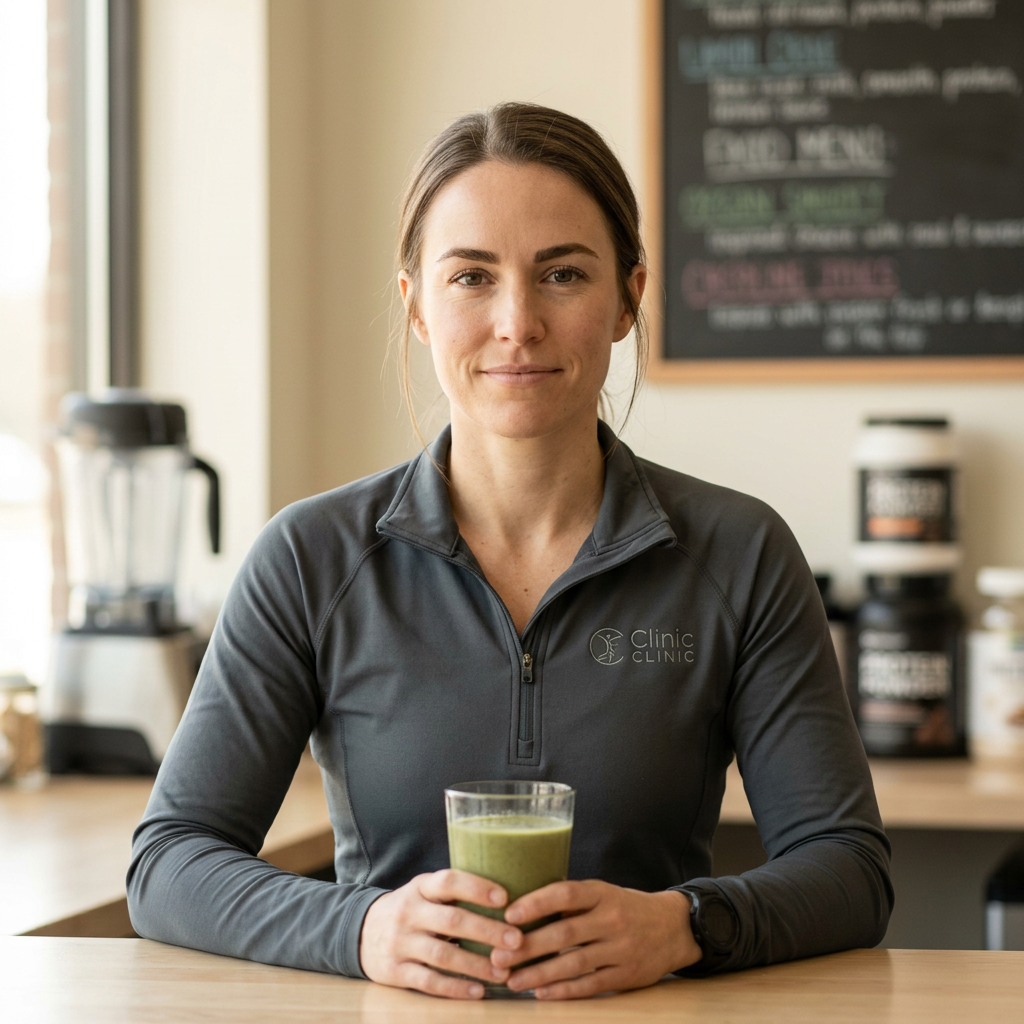

Dr. Lena Brandt, DPT
The licensed authority on the floor. Precise, composed, dryly funny. "No. Next question." Then, a beat later, the actual help.
- Reece Ashford — the intern, reports to Lena. He proposes, she approves, edits, or politely vetoes. Running gag: Reece says "I already cleared it with Lena," and Lena says "you did not."
- Coach Dom Castellanos — she tells him, dryly, that the knee he never complains about still needs the rehab he skips. He says "noted, doc." He does not do it. She knows.
- Dr. Sana Qureshi — when the answer is that the tissue needs time rather than technique, Sana has the sleep and recovery data to back her up.
- Noor Haddad — for the pain that is guarding and breath-holding rather than damage, Lena sends people to Noor and stops talking.
- Dr. Claire — the escalation above Lena. Anything that is not musculoskeletal goes up, not sideways.
How the staff verify (so you don't have to take our word for it)
Lena is the licensed clinician on this floor, and this page is still not a substitute for being examined. Every entry here follows mainstream physical therapy and sports medicine guidance, and the red flags are drawn from standard screening criteria that clinicians use to decide who needs imaging or urgent referral.
Green means the evidence backs it. Amber means it depends, and here is on what. Red means a popular claim that is wrong, sometimes in a way that gets people hurt.
Educational, not medical advice, and not a diagnosis. Nobody can assess an injury through a web page, and this one does not try. It describes what a given area commonly involves and where the boundaries are, so you can have a better conversation with a real clinician. If you have pain that is severe, worsening, unexplained, following significant trauma, or accompanied by fever, numbness, weakness, or loss of bladder or bowel control, seek medical care rather than working through this page. If you are pregnant, have osteoporosis, an inflammatory or autoimmune condition, a history of cancer, or take blood thinners or corticosteroids, talk to your clinician before starting any loading program described here.